One of the most common things I hear from people starting their loc journey is:
“I was told I shouldn’t wash my starter locs.”
And usually what they really mean is, “I was told not to wash them for weeks or months because they might unravel.”
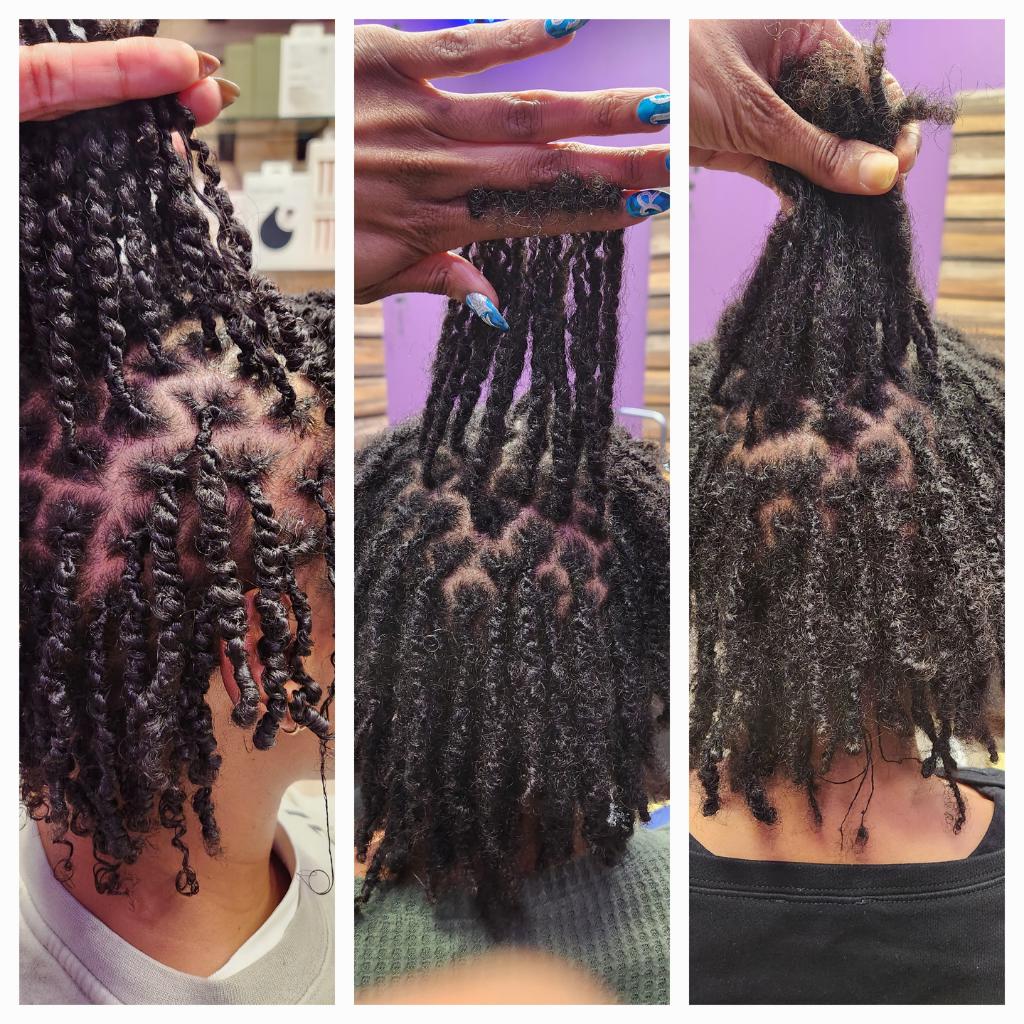
Your starter locs may loosen, frizz, swell, or look less perfectly formed after shampooing. That does not mean your loc journey has failed.
Your hair still needs to be cleansed.
Your scalp is still producing oil. You are still sweating. Products, lint, environmental debris, dead skin, and everyday buildup do not disappear just because your hair is locking.
Healthy locs need a healthy foundation, and that starts with a clean scalp and clean hair.
Your Scalp Does Not Stop Being A Scalp Because You Have Locs
Locs are a hairstyle and a hair-care method. They do not change the basic needs of your scalp.
Over time, your scalp naturally accumulates:
- sweat
- sebum
- dead skin
- styling-product residue
- environmental debris
If you continuously add products without cleansing regularly, that buildup has somewhere to go.
And with locs, buildup can become especially frustrating because once residue becomes trapped inside the loc, it can be much harder to remove than it would be from loose hair.
Washing is not the enemy of healthy locs.
Heavy buildup is.
But Won’t Washing Make My Starter Locs Unravel?
They may loosen.
Some may frizz.
A few sections may need maintenance.
That is very different from saying they should not be washed.
Starter locs are still learning their shape. Depending on your texture, starter method, length, and how mature they are, water may cause them to swell or loosen temporarily.
That is part of the process.
Trying to preserve a perfectly crisp starter-loc appearance at the expense of cleansing the hair and scalp is not a trade I recommend.
Your locs are supposed to develop, not remain frozen in the exact shape they had on installation day.
Frizz Is Part Of The Loc Journey
This deserves its own section because frizz scares people.
Starter locs often become fuzzy as the hair begins tangling, expanding, contracting, and intertwining with itself.
That fuzzy stage is not automatically a sign that something is wrong.
In fact, constantly trying to eliminate every bit of frizz can sometimes lead people toward excessive retwisting, heavy gels, waxes, or unnecessary manipulation.
Locs do not have to look freshly retwisted every day to be healthy.
They need time to mature.
Clean Hair Can Actually Support The Locking Process
Water changes the hair.
When textured hair gets wet, the strands swell, move, contract, and interact with one another. As starter locs mature, those repeated cycles are part of how the hair begins settling into its locked structure.
That does not mean you need to aggressively scrub or manipulate immature locs.
It means water itself is not something starter locs need to fear.
The goal is thoughtful cleansing that respects the stage your locs are in.
How Starter Locs Are Washed Matters
A mature set of locs and a brand-new set of starter locs may not be shampooed exactly the same way.
Early in the journey, cleansing may need to be gentler.
The focus should be on cleansing the scalp thoroughly without unnecessarily disturbing the starter pattern.
You generally want to avoid aggressive rubbing, pulling, twisting, or piling the locs together while shampooing.
Depending on your starter method, your stylist may also recommend a particular washing technique while the locs are still developing.
This is one of the reasons I prefer teaching clients how to care for their actual locs, rather than handing everyone the same generic loc rulebook.
Be Careful With Heavy Products
One of the easiest ways to create buildup in locs is repeatedly applying thick products that are difficult to rinse away.
At Serenity, routine retwist maintenance does not rely on heavy gels or waxes.
The cleaner and lighter your product routine is, the easier it is to maintain both your scalp and your locs over time.
More product does not automatically mean more moisture, more hold, or healthier locs.
Sometimes it just means… more stuff inside your hair.
Your Locs Need To Dry Thoroughly Too
Cleansing is only half of the equation.
Locs also need enough time to dry completely after washing.
The thicker, longer, or more mature your locs become, the more important proper drying becomes because locs can hold water internally longer than loose hair.
That means washing your locs at midnight, tying them up soaking wet, and going straight to sleep is generally not the dream scenario.
Give your locs adequate drying time.
How Often Should You Wash Your Locs?
There is no single schedule that works for every person.
Your ideal cleansing rhythm can depend on:
- your scalp
- activity level
- how much you sweat
- product use
- lifestyle
- loc density and maturity
- your maintenance schedule
Some people need more frequent cleansing than others.
Instead of chasing a universal number, pay attention to what your hair and scalp are actually telling you.
If your scalp is consistently itchy, heavily coated, sweaty, flaky, or uncomfortable long before your next maintenance appointment, waiting simply because your calendar says it is “not wash day yet” may not make sense.
What About Washing Between Retwists Or Reties?
Yes, you can have clean locs without having freshly maintained roots.
Those are two separate things.
A retwist or retie organizes and maintains the new growth.
Shampoo cleans your hair and scalp.
You do not have to keep your scalp dirty just to preserve the appearance of freshly maintained roots.
Your roots may become softer or less defined after washing. That is okay.
Healthy hair does not need to look freshly serviced every day.
The Goal Is Healthy Locs, Not Perfect Locs
Locs change as they mature.
They frizz. They swell. They compact. They soften. They develop personality.
Your job is not to prevent every visible sign of that process.
Your job is to support the hair and scalp while the locs develop.
Regular cleansing, thoughtful product use, proper drying, appropriate maintenance, and paying attention to changes in your scalp will take you much further than trying to keep your starter locs untouched for months.
Starter Locs Still Need Care
If you are unsure when or how to wash your particular starter locs, ask your loctician.
Your starter method, hair texture, loc size, and stage of development all matter.
At Serenity, the goal is not simply to create locs that look good on appointment day. It is to help you build a routine that supports healthy locs for the long haul.